How to stop feeling tired: 8 tips that actually help
The alarm goes off and you’re already tired. By mid-afternoon your eyes are closing, and by the evening there’s no energy left for anything that isn’t essential. Everyone feels tired sometimes. But if it slows you down every day, it’s worth taking a closer look.
Often it’s small habits that make the difference. Here are 8 practical ways to stop feeling tired, plus the warning signs that mean it’s time to get checked by a doctor.
1. Keep a fixed wake-up time
Most adults need around 7 to 9 hours of sleep. But regularity matters as much as length. If you get up at 6:30 on weekdays and sleep until 11 at the weekend, your body clock shifts back and forth. Monday then feels like a mini jet lag.
What to do: get up at roughly the same time every day, weekends included. If you’re short on sleep, go to bed earlier rather than getting up later. You can read more about why lie-ins don’t work as well as we think in our article on autumn tiredness and four common energy myths.
2. Get daylight in the morning
Your body clock sets itself mainly by light. Bright light in the morning tells your body the day has started. Even on a cloudy day, it’s many times brighter outdoors than in a typical office.
What to do: spend 10 to 15 minutes outside, ideally within the first hour after waking. Walking part of the way to work or taking your first coffee outside is enough.
3. Move, even when you don’t feel like it
It sounds backwards, but when you’re tired, moving is often what helps. A brisk walk gets your circulation going, and people who are regularly active usually sleep better too.
What to do: the World Health Organization (WHO) recommends at least 150 minutes of moderate activity a week for adults, for example 30 minutes five times a week. Taking the stairs, cycling to work or a walk at lunchtime all count.
4. Drink enough
Even mild dehydration can show up as tiredness or trouble concentrating. It’s easy to forget to drink during a busy day, especially in heated rooms.
What to do: drink regularly throughout the day, ideally water or unsweetened tea, and more when you exercise or it’s hot. Pale yellow urine is a simple sign you’re drinking enough. Keeping a glass of water on your desk helps you remember. Our guide to the benefits of drinking enough water has more on this.
5. Eat meals that keep you full
A big, heavy lunch is a common cause of the afternoon slump. Sweets aren’t a good pick-me-up either: a meta-analysis of 31 studies found no improvement in mood after sugar, and within the first hour people tended to feel more tired.
What to do: combine carbs with protein and fibre, for example wholegrain bread with cottage cheese, a lentil salad, or fruit with a handful of nuts. Go for a slightly smaller lunch and a small snack in the afternoon.
6. Use caffeine wisely
Coffee helps in the short term because caffeine blocks the tiredness signal in your brain. The tiredness doesn’t go away, though, and it comes back later. Caffeine in the afternoon can also disturb your sleep that night: in one study it still affected sleep when taken 6 hours before bed.
What to do: have coffee in the morning or around lunch and avoid caffeine in the 6 hours before bed.
7. Take a short nap, not a long one
A short nap can get you through an early-afternoon dip. Sleep too long and you drift into deep sleep, which tends to leave you groggy.
What to do: keep it to 10 to 20 minutes, ideally before 3 pm, and set an alarm. If you struggle to fall asleep at night, skip the nap.
8. Watch your breaks and stress levels
Ongoing stress and working for hours without a break are tiring, even if you’re barely moving. Long evenings on your phone also tend to push bedtime later.
What to do: build short breaks into your day: stand up, open a window, look into the distance. Put your phone away for the last half hour before sleep.
When tiredness needs a doctor
If you still feel tired for several weeks despite good habits, get it checked. That’s especially true if:
- you’re losing weight without trying, or have a fever or night sweats,
- you get out of breath easily or notice a racing heart,
- you snore loudly and someone has noticed pauses in your breathing,
- you’ve felt low or unmotivated for weeks,
- the tiredness affects your daily life or your driving.
Ongoing tiredness can be caused by things like iron deficiency, low vitamin B12, an underactive thyroid, sleep apnoea or depression. A blood test often brings clarity quickly. Only take iron supplements after checking with your doctor.
What about supplements?
A supplement doesn’t replace sleep or the habits above. But some days are harder than others, and that’s where it can help.
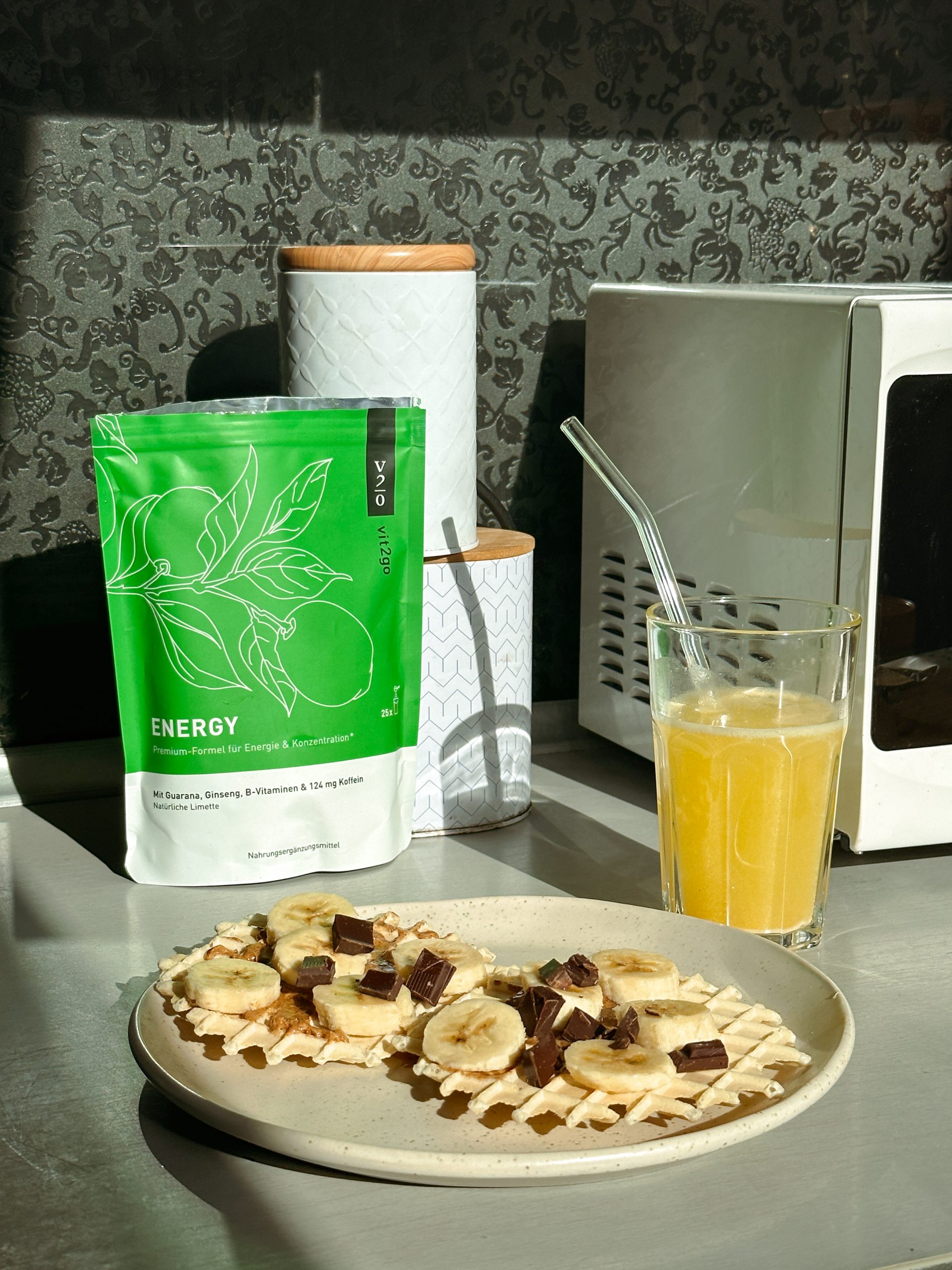
Vit2go Energy combines guarana, ginseng and caffeine with B vitamins. Vitamins B2, B3, B5, B6 and B12 contribute to the reduction of tiredness and fatigue. You mix it into water, and the sachets fit in any bag.
Each sachet contains 124 mg of caffeine, a little more than a cup of filter coffee. Take it the way you’d have a coffee: in the morning or before training, no more than one sachet a day, not on an empty stomach and not combined with other caffeinated drinks or alcohol. It’s not recommended for children, during pregnancy or breastfeeding, or if you’re taking medication.
FAQ
What is my body lacking if I’m always tired?
That’s impossible to say without a check-up. Iron and vitamin B12 are among the nutrients whose deficiency is often linked to tiredness. But irregular or too little sleep, stress or an infection are also common causes. A blood test from your doctor shows whether anything is missing.
What gives you energy quickly when you’re tired?
In the moment, fresh air, a few minutes of movement and a large glass of water help. A coffee makes you more alert for a while, but not too late in the day. A 10 to 20 minute nap can also help.
Why do I feel tired all the time?
The most common reasons are too little or irregular sleep, little daylight and movement, stress and not drinking enough. If the tiredness lasts despite good habits, ask your doctor to look into the cause.
How much caffeine is too much?
According to the European Food Safety Authority (EFSA), up to 400 mg a day raises no safety concerns for healthy adults, with single doses of up to 200 mg. During pregnancy and breastfeeding the limit drops to 200 mg a day. Count every source: coffee, tea, cola, energy drinks and supplements.
Sources
- Mantantzis K. et al. (2019). Sugar rush or sugar crash? A meta-analysis of carbohydrate effects on mood. Neuroscience & Biobehavioral Reviews, 101.
- Drake C. et al. (2013). Caffeine effects on sleep taken 0, 3, or 6 hours before going to bed. Journal of Clinical Sleep Medicine.
- WHO. Physical activity.
- EFSA. Caffeine.
- European Commission. EU Register of nutrition and health claims.