Autumn tiredness: 4 energy myths almost everyone believes
Autumn brings shorter days, an endless to-do list and a tiredness you can’t quite explain. You’re not imagining it. Many people feel sleepier, flatter and less motivated when the seasons change. It isn’t an illness, but you notice it.
Before looking for fixes, it’s worth clearing up four myths about energy that almost everyone believes. Some of them make the tiredness last longer.
Myth 1: “Coffee gives me energy”
The truth: caffeine doesn’t create energy. It blocks the tiredness signal.
Throughout the day your brain builds up adenosine, a molecule that tells it it’s time to rest. Caffeine sits on the receptors adenosine uses, so for a few hours that signal doesn’t get through. That’s why you feel more awake.
But the adenosine is still there. When the caffeine wears off, the tiredness you’ve built up hits all at once. And an afternoon coffee can cost you sleep that night, so tomorrow you’re more tired and reach for another cup.
What to do: treat coffee as a helper, not a substitute for rest. Have it in the morning or around lunch and avoid caffeine in the 6 hours before bed. One study found that caffeine taken even 6 hours before bedtime still reduced sleep.
Myth 2: “A weekend lie-in helps me catch up”
The truth: shifting your sleep schedule a lot at the weekend works like a mini jet lag.
Researchers call it social jet lag: the gap between when you sleep on workdays and on days off. If you get up at 7 during the week and at 11 on Saturday, your body clock shifts as if you’d flown to another time zone. The study that coined the term linked it with lower wellbeing and higher use of stimulants such as coffee. That’s why Monday feels so hard even after a long sleep.
What to do: wake up at roughly the same time every day, weekends included. If you need to catch up on sleep, go to bed a little earlier rather than getting up much later.
Myth 3: “Autumn tiredness is all in my head”
The truth: it’s biology, not laziness.
Your body clock sets itself mainly by light. With fewer hours of daylight, your body makes melatonin, the hormone that prepares you for sleep, for longer and switches into rest mode earlier. At the end of October the clocks go back too, which throws routines off for a few days.
What to do: get natural light in the morning, even just 10 to 15 minutes. Even on a cloudy day, outdoor light is far brighter than office lighting. A short walk at the start of the day gives you light and movement at once.
If the tiredness lasts more than a few weeks, comes with persistent low mood or gets in the way of daily life, talk to your doctor. Other causes, such as anaemia or a thyroid problem, are worth ruling out.
Myth 4: “Something sweet will perk me up”
The truth: sugar doesn’t give you the boost you expect.
A meta-analysis of 31 studies with more than 1,200 people found no improvement in mood after eating sugar. If anything, within the first hour people who had sugar felt more tired and less alert than those given a placebo.
What to do: if you need an afternoon snack, pair carbs with protein or fibre. For example, fruit with a handful of nuts, or plain yoghurt. They digest more slowly and keep you fuller for longer.
What actually helps with autumn tiredness
- Getting up at roughly the same time every day.
- Natural light in the morning, even for a short while.
- Moving: a walk, cycling to work or your usual workout.
- Coffee, yes, but early and without relying on it.
- Meals and snacks that combine carbs, protein and fibre.
- Drinking water throughout the day.
What about supplements?
A supplement doesn’t replace rest or these habits. But some days are harder than others, and that’s where it can help.
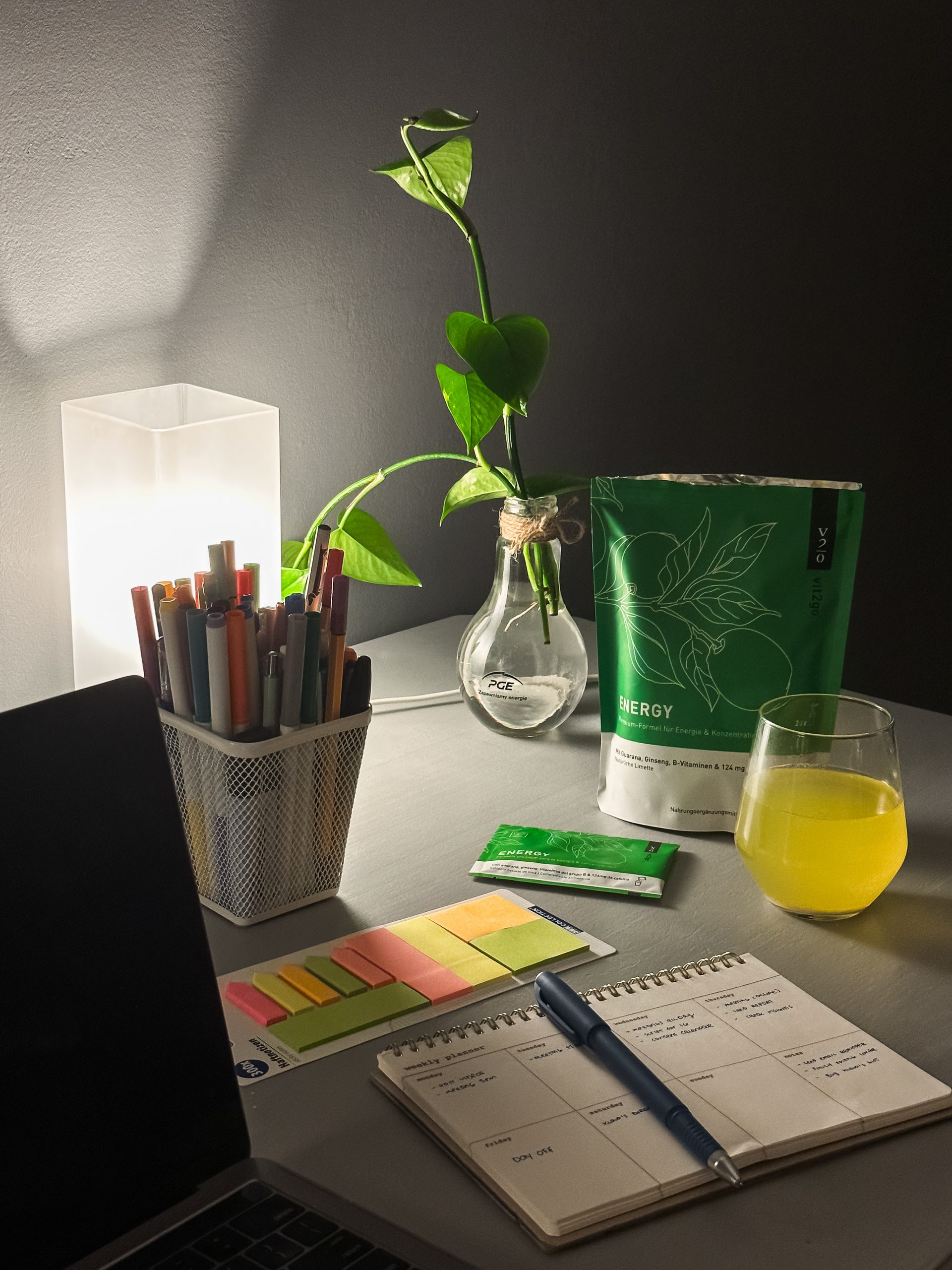
Vit2go Energy combines guarana, ginseng and caffeine with B vitamins. Vitamins B2, B3, B5, B6 and B12 contribute to the reduction of tiredness and fatigue. You mix it into water, and the sachets fit in any bag.
Each sachet contains 124 mg of caffeine, a little more than a cup of filter coffee. Take it the way you’d have a coffee: in the morning or before training, no more than one sachet a day, not on an empty stomach and not combined with other caffeinated drinks or alcohol. It’s not recommended for children, during pregnancy or breastfeeding, or if you’re taking medication.
FAQ
How long does autumn tiredness last?
It’s usually temporary: most people’s bodies adjust within a few days to a few weeks. If the tiredness drags on or gets worse, talk to your doctor.
How much caffeine is too much?
According to the European Food Safety Authority (EFSA), up to 400 mg a day raises no safety concerns for healthy adults, with single doses of up to 200 mg. During pregnancy and breastfeeding the limit drops to 200 mg a day. Count every source: coffee, tea, cola, energy drinks and supplements.
Why am I tired even after 8 hours of sleep?
Hours matter, but they’re not everything. An irregular schedule, little morning light, afternoon caffeine or poor sleep quality can leave you tired even after 8 hours in bed. If it happens often, mention it to your doctor.
Does the clock change make you more tired?
It can throw you off for a few days, especially if you were already short on sleep. Keeping your wake-up time steady and getting morning light helps your body adjust faster.
Sources
- Mantantzis K. et al. (2019). Sugar rush or sugar crash? A meta-analysis of carbohydrate effects on mood. Neuroscience & Biobehavioral Reviews, 101.
- Wittmann M., Dinich J., Merrow M., Roenneberg T. (2006). Social jetlag: misalignment of biological and social time. Chronobiology International.
- Drake C. et al. (2013). Caffeine effects on sleep taken 0, 3, or 6 hours before going to bed. Journal of Clinical Sleep Medicine.
- EFSA. Caffeine.
- European Commission. EU Register of nutrition and health claims.